
The Battle for Immortality: The Asuras and the Devas

Part 1 - Origins of the Rivalry
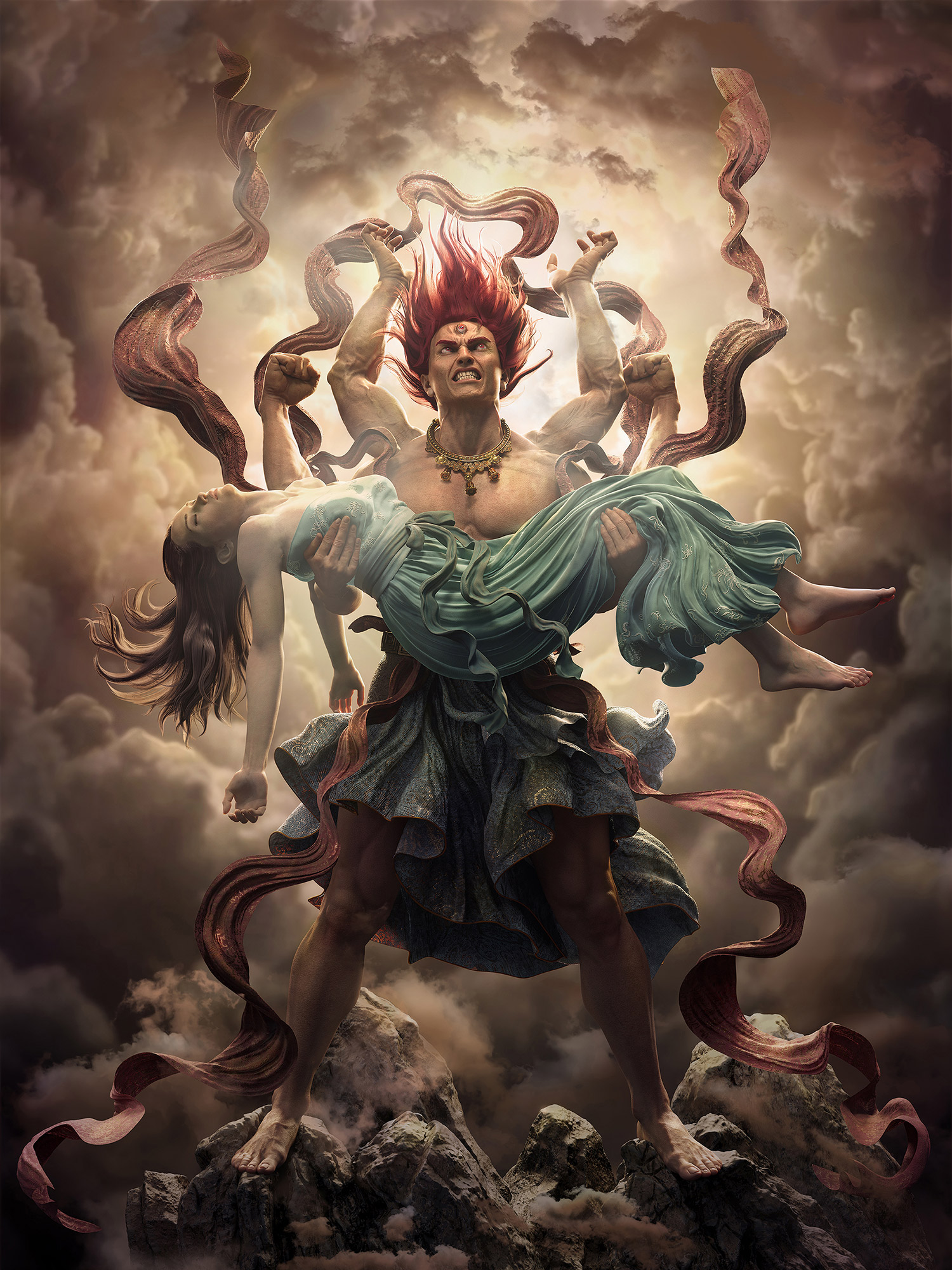


The Asuras and the Devas are two opposing forces that have been locked in an eternal struggle for power and supremacy. The Asuras, also known as demons, were said to be born from the breath of Brahma, while the Devas, also known as gods, were born from his body.
The rivalry between the two groups began when they fought for the elixir of immortality, known as Amrita. The Devas wanted to drink it to become immortal, while the Asuras sought it to gain power and conquer the world.


The Devas, with the help of Vishnu, tricked the Asuras and took the Amrita for themselves, which led to a fierce battle between the two groups. The Devas emerged victorious, and the Asuras were relegated to the netherworld.

This story highlights the greed and lust for power that can lead to destructive conflicts. It also shows that power can be obtained through deception and trickery, but it comes with consequences.

Comments

Popular posts from this blog

Attaining the power of supreme

 Chapter 8 of the Bhagavad Gita is titled "Attaining the Supreme" and focuses on the path to ultimate liberation and enlightenment. In this chapter, Lord Krishna explains to Arjuna the nature of the afterlife and how to attain a state of union with the divine. The chapter begins with Lord Krishna describing the ultimate reality of Brahman, the source of all beings. He explains that by meditating on Brahman at the time of death, one can attain a state of transcendence and achieve liberation from the cycle of birth and death. Lord Krishna explains that the nature of the afterlife depends on one's state of consciousness at the time of death. Those who are attached to the material world and have not attained a higher level of consciousness will be reborn into the material world, while those who have attained a higher level of consciousness will merge with Brahman. Throughout the chapter, Lord Krishna emphasizes the importance of devotion and spiritual practice in attainin...

The Eternal Power of Vishnu: Understanding the Cosmos Through Vishnu Purana First Amsa

  Vishnu Purana is one of the eighteen Puranas in Hindu literature, which deals with a range of topics, including cosmology, mythology, and genealogy. The first Amsha or part of Vishnu Purana presents a unique perspective on the creation, maintenance, and destruction of the universe. Unlike some other Puranas where Shiva or Brahma or goddess Shakti are offered prominence, the central element of the cosmology presented in Vishnu Purana is the Hindu god Vishnu. The first part of Vishnu Purana describes the reverence and worship of Vishnu in 22 chapters as the means for liberation. The first five chapters of Vishnu Purana present the mythology of creation, which is woven with the evolutionary theories of the Samkhya school of Hindu philosophy. Vishnu is described as the source of all elements, all matter in the world, the entire universe, all living beings, as well as Atman (Inner Self, essence) within every living being. One of the most famous legends in the Vishnu Purana is the stor...

The Fragrant Miracles of the Perfume Saint from Autobiography of YOGI

Have you ever encountered a saint whose very presence exudes an enchanting fragrance, captivating all who come near? Prepare to be transported into the mystical realm of the Perfume Saint, where miracles unfold and the senses come alive. In the enchanting land of India, amidst the spiritual seekers and mystics, there lived a saint renowned for his divine fragrance. His name was Sri Ramakrishna, affectionately known as the Perfume Saint. Legends spoke of his extraordinary ability to emit a captivating scent that filled the air, leaving those in his presence spellbound. Imagine standing in a vibrant garden filled with flowers of every hue. The air is alive with the sweet scent of jasmine, rose, and sandalwood. Now, envision the Perfume Saint, a radiant figure emanating an aura of pure bliss. As he walks, petals fall at his feet, the very ground upon which he treads adorned with nature's offerings. Within the ashram where the Perfume Saint resided, disciples and visitors were drawn b...